
News & media
Keep up with the latest news about LIFE
Latest news
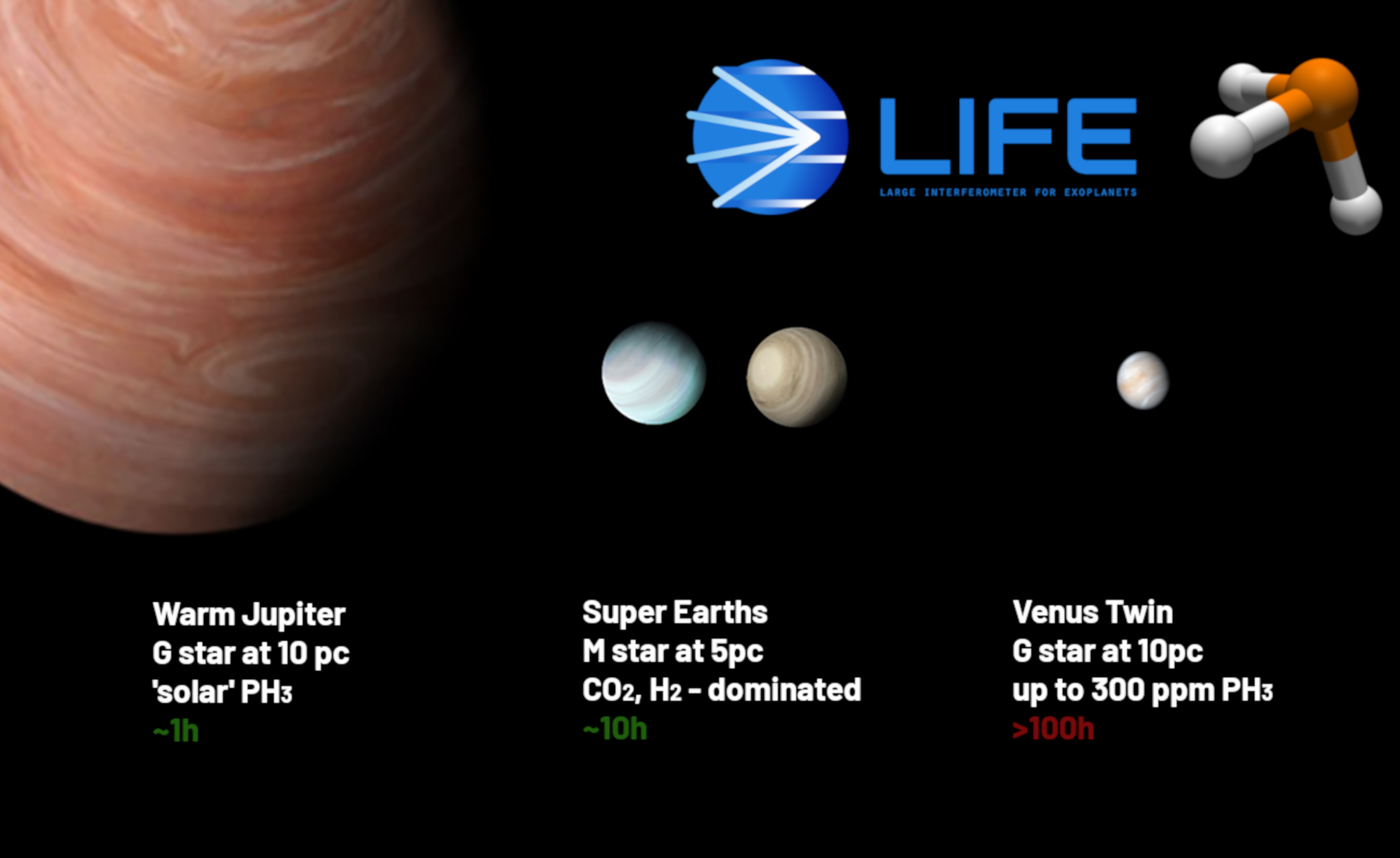
LIFE paper VIII accepted: “Where is the phosphine?”
November 16, 2022
Phosphine is a key molecule in the understanding of exotic chemistry of exoplanet atmospheres. While it has been detected in the Solar System's giant planets, it has not been observed in exoplanets yet. In the exoplanetary context however it has been theorized as a potential biosignature molecule. Angerhausen et al. identified a representative set of scenarios for phosphine detections in exoplanetary atmospheres varying over the whole dynamic range of the LIFE mission.
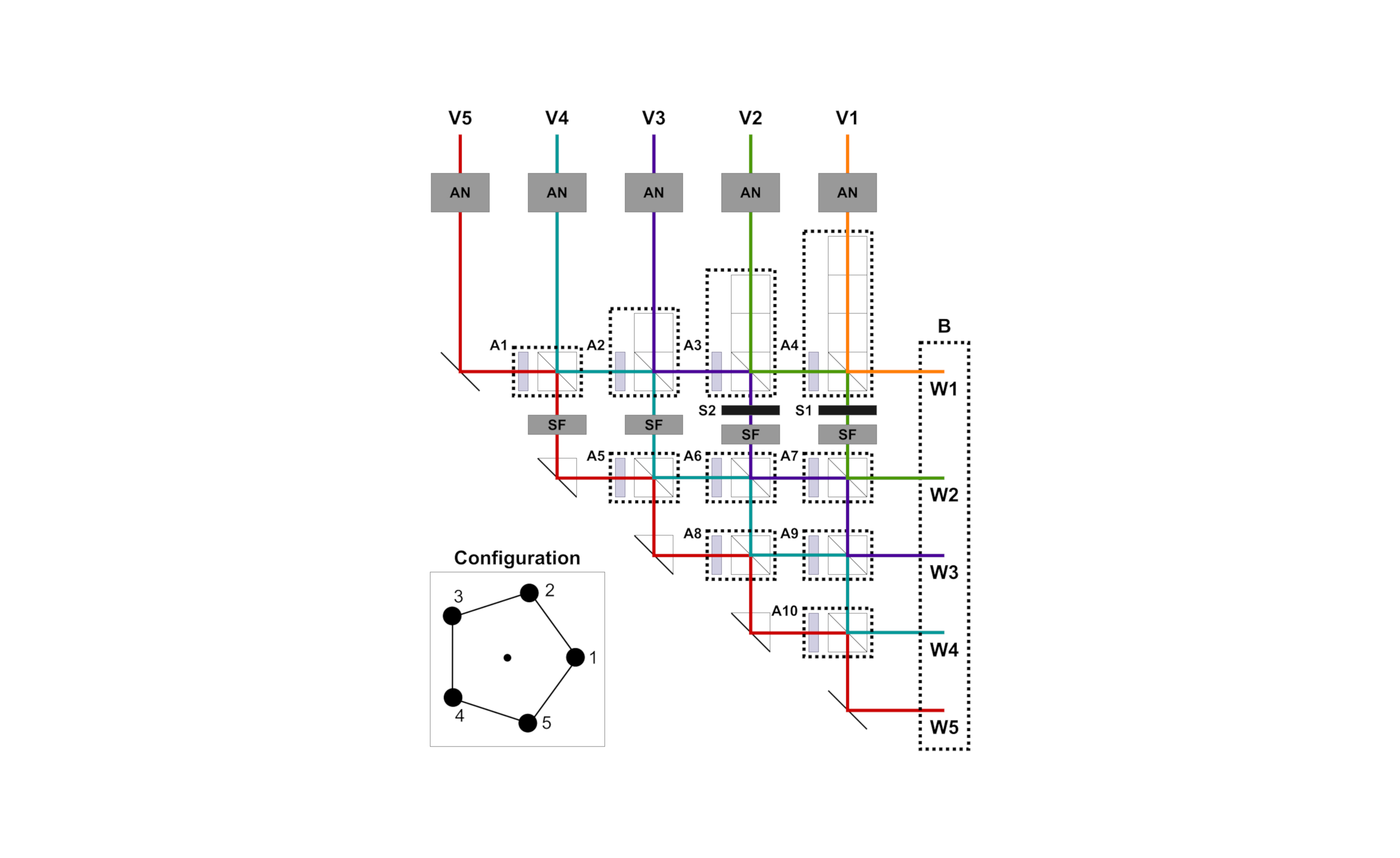
Paper VII of the LIFE paper series accepted for publication
November 1, 2022
In this paper, Hansen et al (arxiv) follows on their analysis of architectures from paper IV, this time delving into some of the practical and instrumental considerations of building a beam combiner. They present a possible five telescope…
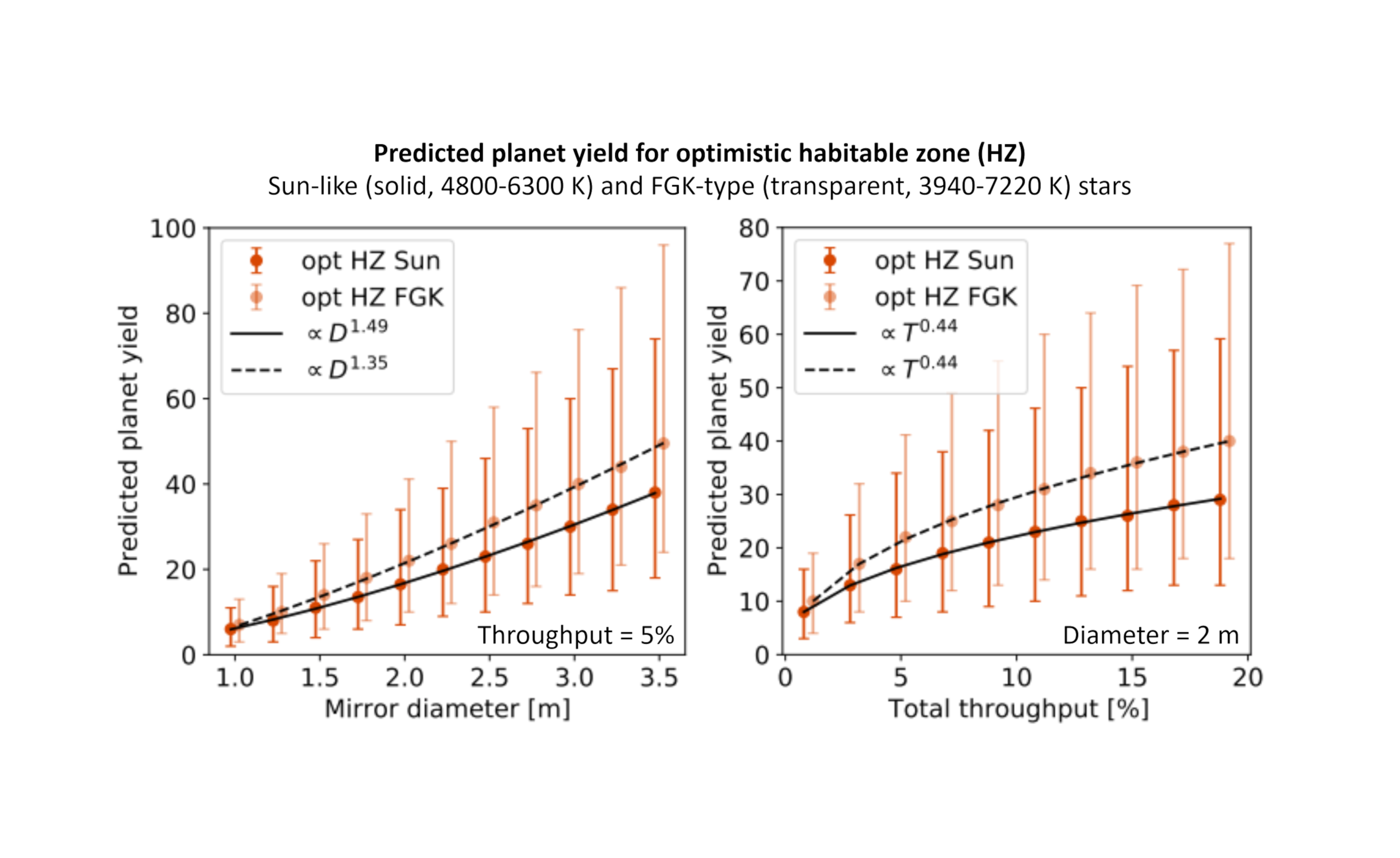
Paper VI of the LIFE paper series accepted for publication
October 7, 2022
Kammerer et al. (arXiv link) show that LIFE would also be a powerful mission to search for Earth-like planets around Sun-like stars. This is important because the true habitability of habitable zone (HZ) planets around M-dwarfs is still an…
LIFE in the media
Auch das Fehlen von Ausserirdischen bringt uns weiter
[SRF] Derzeit werden erstmals Teleskope entwickelt, die darauf ausgelegt sind, systematisch nach Leben auf anderen Planeten zu suchen. Dazu gehört das Teleskop LIFE, das Forschende an der ETH Zürich planen.
How rare are inhabited worlds in the universe? The LIFE space telescope fleet could find out
[space.com] Still, Angerhausen and colleagues at ETH Zurich wanted to find out how much LIFE could tell us, even if it failed to find biosignatures. The team employed a Bayesian statistical model to find the smallest number of exoplanets LIFE would need to observe.
In the search for life on exoplanets, finding nothing is something too
[phys.org] It is not just about how many planets we observe; it is about asking the right questions and how confident we can be in seeing or not seeing what we are searching for.
Scientists want new mission to seek out alien life
[BBC] Astronomers from ETH Zurich want to send space telescopes to explore exoplanets even further away than Neptune, the planet furthest from the Sun.
Nearby Habitable-Zone Exoplanet May Be a World of Fire and Ice
[Scientific American] Upcoming or proposed missions like NASA’s Habitable Worlds Observatory and ESA’s Large Interferometer For Exoplanets are meant to directly image potentially habitable worlds.
Die knifflige Suche nach außerirdischem Leben
[Deutschlandfunk] Hoffnungen ruhen bereits auf der nächsten Teleskop-Generation. Das internationale Projekt Large Interferometer for Exoplanets will eine Art Kamera für ferne Exoplaneten bauen.