
News & media
Keep up with the latest news about LIFE
Latest news
LIFE XII paper accepted in AJ: Sniffing Capstone Biosignatures in the MIR
January 17, 2024
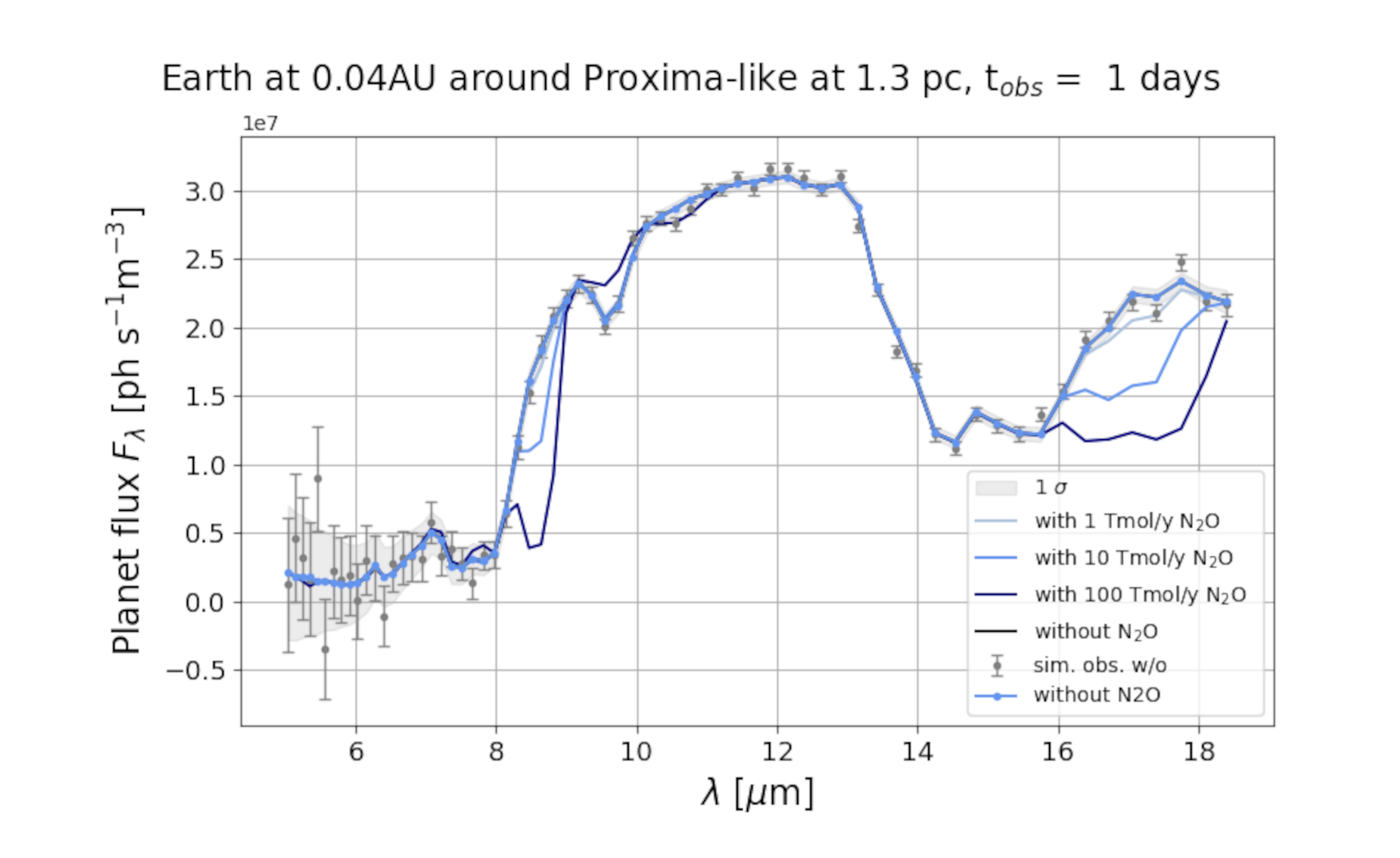
LIFE paper XII - "The Detectability of Capstone Biosignatures in the Mid-Infrared -- Sniffing Exoplanetary Laughing Gas and Methylated Halogens", is accepted for publication in AJ and available on arXiv as of today. We hope that there is a…
LIFE XI paper accepted in A&A: Phase-space synthesis decomposition
August 21, 2023
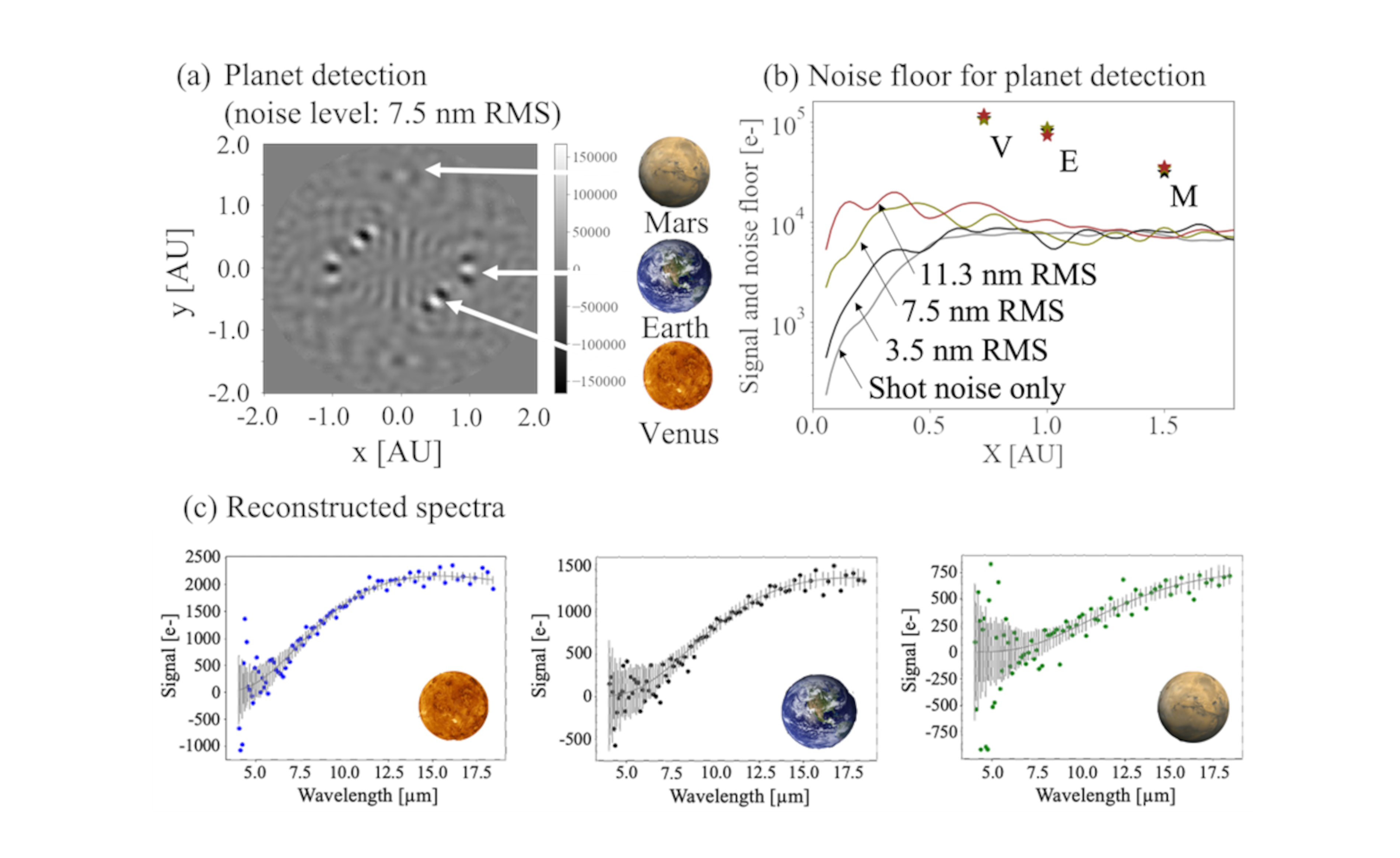
In this paper, Matsuo et al. (arxiv link) propose a method for planet detection and characterization with LIFE, named "phase-space synthesis decomposition" (PSSD). PSSD focuses on the correlation of the planetary signal over the entire…
Observing known Exoplanets with LIFE: 10th LIFE paper accepted
August 21, 2023
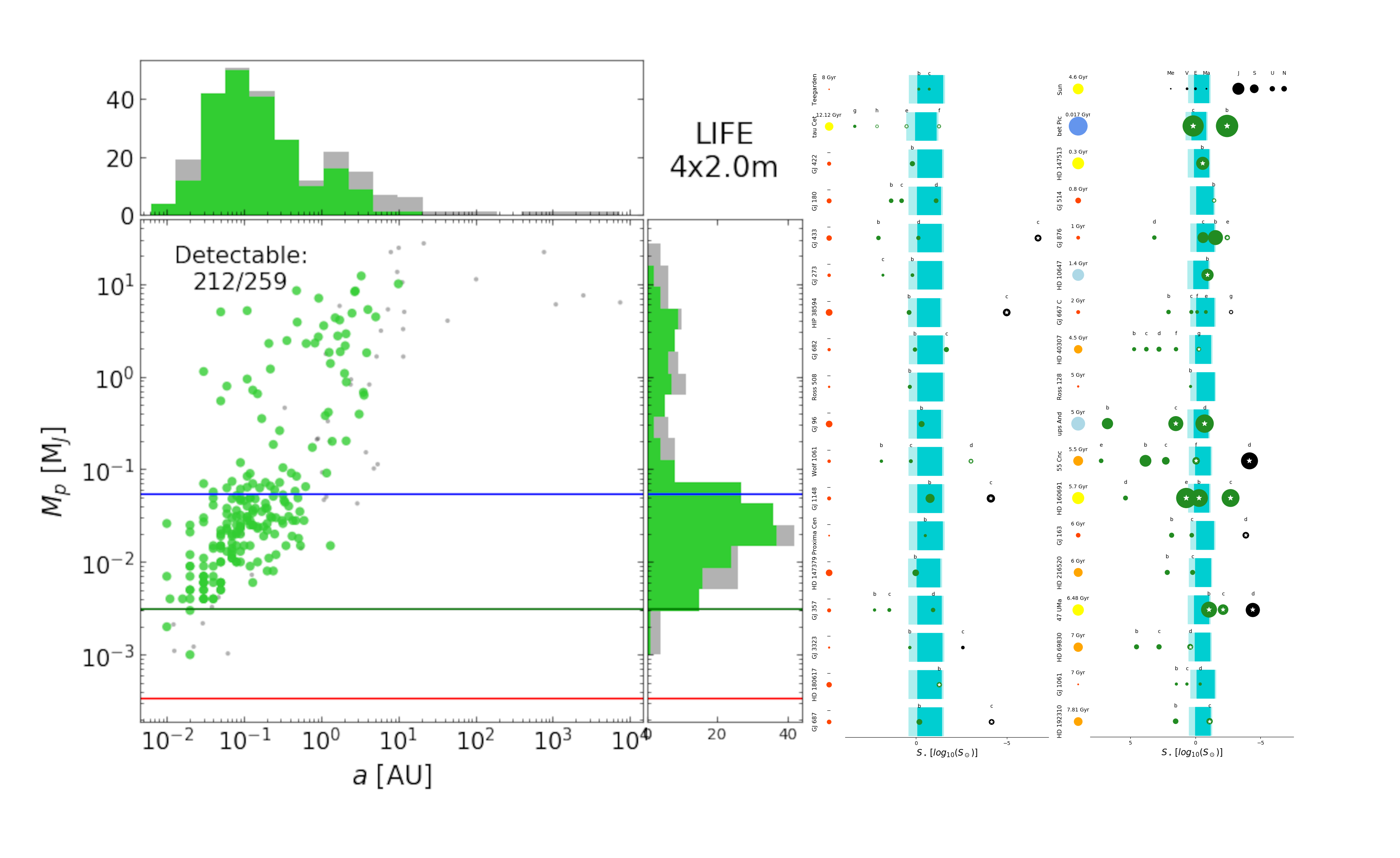
Out of the 259 known exoplanets within 20 parsec, LIFE’s reference configuration can detect 212 of them. Of these, 38 LIFE-detectable planets orbit in the habitable zone of their host star, including 13 low-mass planets with Mp<5M⊕.
LIFE in the media
Auch das Fehlen von Ausserirdischen bringt uns weiter
[SRF] Derzeit werden erstmals Teleskope entwickelt, die darauf ausgelegt sind, systematisch nach Leben auf anderen Planeten zu suchen. Dazu gehört das Teleskop LIFE, das Forschende an der ETH Zürich planen.
How rare are inhabited worlds in the universe? The LIFE space telescope fleet could find out
[space.com] Still, Angerhausen and colleagues at ETH Zurich wanted to find out how much LIFE could tell us, even if it failed to find biosignatures. The team employed a Bayesian statistical model to find the smallest number of exoplanets LIFE would need to observe.
In the search for life on exoplanets, finding nothing is something too
[phys.org] It is not just about how many planets we observe; it is about asking the right questions and how confident we can be in seeing or not seeing what we are searching for.
Scientists want new mission to seek out alien life
[BBC] Astronomers from ETH Zurich want to send space telescopes to explore exoplanets even further away than Neptune, the planet furthest from the Sun.
Nearby Habitable-Zone Exoplanet May Be a World of Fire and Ice
[Scientific American] Upcoming or proposed missions like NASA’s Habitable Worlds Observatory and ESA’s Large Interferometer For Exoplanets are meant to directly image potentially habitable worlds.
Die knifflige Suche nach außerirdischem Leben
[Deutschlandfunk] Hoffnungen ruhen bereits auf der nächsten Teleskop-Generation. Das internationale Projekt Large Interferometer for Exoplanets will eine Art Kamera für ferne Exoplaneten bauen.