
News & media
Keep up with the latest news about LIFE
Latest news

LIFE Team shines at BEACON conference
May 16, 2023
The Biennial European Astrobiology Conference (BEACON) serves as a gathering point for scientists and experts in the Astrobiology field from Europe and beyond. During the latest conference, held on La Palma Island (Canary Islands, Spain) from May, 8th to 12th 2023, the LIFE Team made significant contributions, which we highlight here.
Funding secured for NICE experiment
April 20, 2023
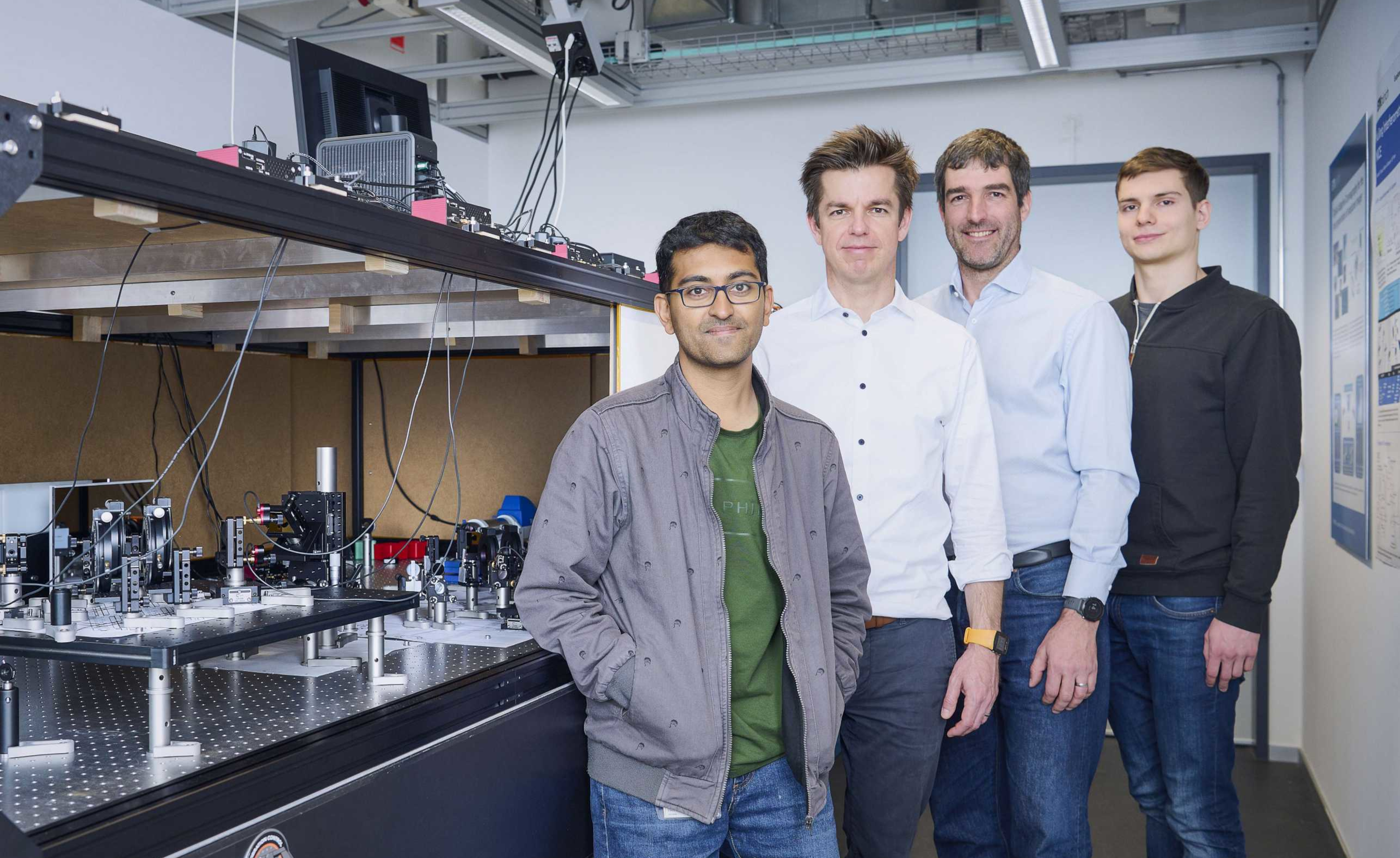
The Swiss government will contribute nearly three million euros to support the NICE (Nulling Interferometer Cryogenic Experiment) project as part of PRODEX (PROgramme de Développement d’EXpériences scientifiques), a European Space Agency (ESA) programme.
LIFE featured at NCCR PlanetS General Assembly
April 20, 2023
During this year's general assembly of the Swiss National Competence Center for Research (NCCR) 'PlanetS', LIFE was featured at various occasions. On Monday during the main session Sascha Quanz pitched our concept as one of the possible…
LIFE in the media
Auch das Fehlen von Ausserirdischen bringt uns weiter
[SRF] Derzeit werden erstmals Teleskope entwickelt, die darauf ausgelegt sind, systematisch nach Leben auf anderen Planeten zu suchen. Dazu gehört das Teleskop LIFE, das Forschende an der ETH Zürich planen.
How rare are inhabited worlds in the universe? The LIFE space telescope fleet could find out
[space.com] Still, Angerhausen and colleagues at ETH Zurich wanted to find out how much LIFE could tell us, even if it failed to find biosignatures. The team employed a Bayesian statistical model to find the smallest number of exoplanets LIFE would need to observe.
In the search for life on exoplanets, finding nothing is something too
[phys.org] It is not just about how many planets we observe; it is about asking the right questions and how confident we can be in seeing or not seeing what we are searching for.
Scientists want new mission to seek out alien life
[BBC] Astronomers from ETH Zurich want to send space telescopes to explore exoplanets even further away than Neptune, the planet furthest from the Sun.
Nearby Habitable-Zone Exoplanet May Be a World of Fire and Ice
[Scientific American] Upcoming or proposed missions like NASA’s Habitable Worlds Observatory and ESA’s Large Interferometer For Exoplanets are meant to directly image potentially habitable worlds.
Die knifflige Suche nach außerirdischem Leben
[Deutschlandfunk] Hoffnungen ruhen bereits auf der nächsten Teleskop-Generation. Das internationale Projekt Large Interferometer for Exoplanets will eine Art Kamera für ferne Exoplaneten bauen.